
What Is a Diamond Saw Blade for Stone?

Time:2026-10-18 Author:Henry
0%

A diamond saw blade for stone is a cutting tool designed to shape hard materials with controlled precision. It uses diamond segments, or a continuous diamond rim, to remove stone through abrasion. Unlike ordinary steel blades, diamond saw blades for stone can handle granite, marble, quartzite, concrete, and engineered slabs. The correct blade depends on the material, cutting method, machine power, and required finish.

In workshop practice, blade selection begins with the stone itself. Granite may require a tougher bond and strong segment retention. Marble usually needs a blade that supports smooth, clean cutting. A wet-cutting blade uses water to reduce heat, control dust, and extend service life. Dry-cutting options offer mobility, but they demand careful speed control and suitable ventilation. Small details matter. Feed pressure, spindle speed, and blade alignment can change the cut dramatically.

No single blade performs perfectly on every stone. That is easy to overlook. A blade that cuts fast may leave a rougher edge or wear sooner. Another blade may produce a cleaner finish but work more slowly. Reliable results come from matching the blade to the application, not choosing by appearance alone. Always check the manufacturer’s specifications, inspect segments before use, and confirm the machine’s compatibility. Protective equipment remains essential, especially during dry cutting. Even experienced operators can misjudge heat or material behavior. Careful observation still matters. This guide explains how diamond saw blades for stone work, how their construction affects performance, and how informed selection can improve cutting quality, safety, and operating value.
What Is a Diamond Saw Blade for Stone?

Definition and Core Function of a Diamond Saw Blade for Stone

A diamond saw blade for stone is a circular cutting tool designed to shape hard materials such as granite, marble, quartzite, concrete, and engineered stone. Unlike a blade with traditional teeth, it uses diamond particles fixed within metal segments or a continuous rim. These particles grind through the stone as the blade rotates, creating a controlled kerf with less tearing along the cut line.

Its core function is accurate material removal. A suitable blade can produce straight cuts for slabs, tiles, curbs, and architectural panels.

Water is often applied during cutting to reduce heat, carry away abrasive dust, and protect the cutting edge. On a workshop floor, the difference is visible: a properly matched blade leaves a cleaner edge, while an unsuitable one may produce chipping, vibration, or slow progress.

Performance depends on more than diamond hardness. Segment design, bond hardness, blade diameter, spindle speed, stone density, and feed pressure all matter. Operators should check the blade’s specifications and the saw’s operating limits before use. Safety glasses, hearing protection, stable material support, and controlled movement are essential.

A common mistake is assuming that a harder blade always cuts better. It may last longer on one stone but work poorly on another.

Even experienced operators sometimes adjust feed speed too late. The cut can look acceptable at first, yet small edge fractures may appear after installation.

For this reason, a short test cut remains useful, especially when the stone has unfamiliar veins or internal tension.

Key Components and How the Cutting Edge Works

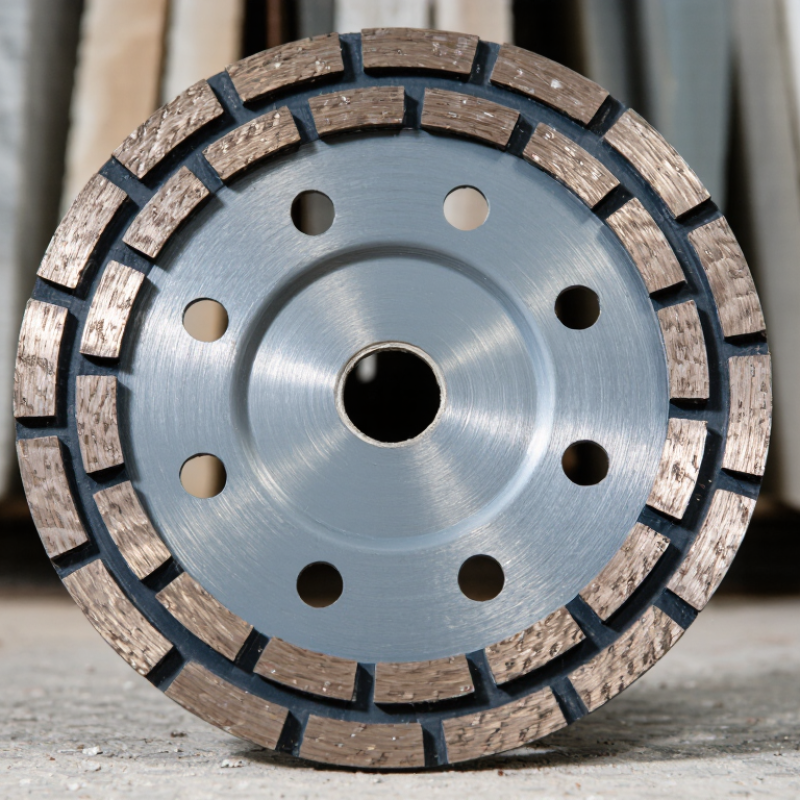
A diamond saw blade for stone is a steel core carrying diamond segments around its rim. The core provides stiffness, while gullets create space for cooling water and debris. Each segment contains synthetic diamond grit inside a metal bond matrix. USGS Mineral Commodity Summaries 2024 estimated global synthetic industrial diamond output at roughly 15 billion carats in 2023, showing why engineered grit dominates modern stone cutting.

The cutting edge works through controlled wear. Exposed diamond crystals scratch and fracture granite, quartzite, marble, or concrete. The bond then wears away, releasing blunt crystals and exposing fresh ones. This process is called self-sharpening.

Too much bond hardness can polish the diamonds instead. Too little hardness can consume the segment quickly. Cutting speed, water flow, stone density, and operator pressure all change this balance.

Segment height matters during long cuts. A taller segment may extend service life, but it cannot fix poor cooling or excessive pressure. In field use, a blade can feel smooth while its edge is already glazing. That is a warning sign. ANSI B7.7 safety guidance emphasizes correct machine setup, guarding, and operating controls, not just blade selection. Some published blade-life tests report major performance differences between granite and softer limestone, but laboratory results rarely match every jobsite. That gap deserves honest attention.

Main Types of Diamond Blades for Different Stone Materials

What Is a Diamond Saw Blade for Stone?

Main Types of Diamond Blades for Different Stone Materials

A diamond saw blade uses bonded diamond segments to cut stone cleanly and efficiently. Its performance depends on the stone’s hardness, thickness, and moisture. In practical stone cutting, choosing the wrong blade often causes chipped edges, slow cutting, or excessive heat.

Segmented diamond blades suit hard materials such as granite, basalt, and dense quartzite. Their gullets release heat and cutting debris during deep cuts. Turbo blades offer a useful balance between speed and edge quality. They work well on slate, limestone, and many masonry stones. Continuous-rim blades produce smoother edges on marble, travertine, ceramic, and porcelain. However, they may cut more slowly through very hard granite. A blade that performs beautifully on one stone can disappoint on another. I have seen experienced workers overlook this detail.

Tips: Match the blade bond to the stone. Use water when the blade allows wet cutting, especially during long cuts. Mark the surface clearly, support thin slabs, and avoid forcing the blade. Engineered quartz needs careful dust control because dry cutting can create hazardous airborne particles. Check the manufacturer’s specifications before use. A small test cut is worthwhile.

What Is a Diamond Saw Blade for Stone?

A diamond saw blade uses diamond particles attached to its cutting edge to cut stone through controlled abrasion. The chart compares representative Mohs hardness values for common stone materials, helping indicate why blade bond, rim design, and cutting speed should be selected according to the material.

Softer materials such as marble are commonly cut with continuous-rim blades for smoother edges. Harder or more abrasive materials such as granite, engineered quartz, porcelain tile, and sandstone may require turbo or segmented diamond blades with an appropriate bond. Actual hardness varies by composition, finish, and manufacturer, so these values are representative ranges rather than laboratory measurements.

How Diamond Blades Cut, Cool, and Manage Stone Dust

What Is a Diamond Saw Blade for Stone?

A diamond saw blade for stone uses industrial diamond particles fixed into metal segments. These particles scratch and fracture stone as the blade rotates. The blade does not slice stone like a kitchen knife. It removes tiny grains through controlled abrasion. Segment hardness, diamond concentration, and blade speed affect cutting performance.

Cooling matters. Water flowing near the cutting edge carries heat away from the segments and stone. It also helps reduce airborne dust, especially when cutting granite, concrete, or engineered stone. Dry cutting can be useful for short work, but the blade may heat quickly. Excessive heat can weaken segments, discolor the material, or create uneven cuts. In practice, I have found that steady water flow works better than occasional splashing. Still, too much water can hide the cutting line.

Tips: Keep the blade aligned with the cut. Use steady pressure and let the diamonds do the work. Inspect the segments before every job. Replace a blade if segments are cracked, uneven, or heavily worn. Wet cutting is usually the cleaner choice, but it does not eliminate dust completely. Use suitable respiratory protection and local ventilation when conditions require it. Stone dust control deserves more attention than it often receives. A slower feed rate may feel inefficient, yet it usually produces a straighter edge and less heat. Mistakes happen when operators focus only on speed.

Choosing, Operating, and Maintaining a Stone-Cutting Diamond Blade

What Is a Diamond Saw Blade for Stone?

Choosing, Operating, and Maintaining a Stone-Cutting Diamond Blade

A diamond saw blade uses industrial diamonds fixed in a metal bond. The diamonds grind stone instead of cutting it like a knife. Its performance depends on the stone, blade bond, diameter, and machine speed. Softer stone usually needs a harder bond, while hard granite often needs a softer bond. This choice is easy to get wrong. A short test cut can reveal more than a product description.

Check the blade for cracks, missing segments, or a warped core before every job. Confirm its diameter, arbor size, and rated speed match the saw. Secure the stone on a stable surface. Keep both hands away from the cutting path. Use water when the blade and machine allow wet cutting. It cools the rim and reduces airborne dust. Do not force the blade through the material. Let the diamonds work at a steady feed rate.

Small details matter. Listen for unusual vibration or a changing cutting sound. Stop immediately if the blade binds or overheats. After use, rinse away stone slurry and dry the blade before storage. Inspect segment wear regularly, especially after long cuts. A glazed blade may need an approved dressing method, but aggressive dressing can shorten its life. I have sometimes blamed the blade too quickly; poor alignment or excessive pressure was the real problem. Record the stone type, cutting speed, and wear pattern. That simple habit improves future blade selection.

FAQS

What is a diamond saw blade for stone?

It is a circular tool for cutting granite, marble, quartzite, concrete, and engineered stone. Industrial diamond particles grind the material. It does not slice like a kitchen knife.

How does the blade remove stone?

The rotating diamonds scratch and fracture tiny grains. This creates a controlled kerf along the cutting line. Steady movement helps produce a straighter edge.

Why is water used during cutting?

Water cools the blade and carries away abrasive slurry. It also reduces airborne dust. Too much water can hide the cutting line.

Can a diamond blade cut stone dry?

Yes, short dry cuts may be possible with suitable equipment. The blade can heat quickly during dry cutting. Stop if discoloration, smoke, or uneven cutting appears.

How should I choose the correct blade?

Match the bond to the stone’s hardness. Softer stone often needs a harder bond, while hard granite may need a softer bond. Diameter, arbor size, and rated speed must match the saw. This choice is easy to get wrong.

What should I inspect before cutting?

Check for cracks, missing segments, uneven wear, and a warped core. Confirm the blade fits the machine. A short test cut is useful when the stone has unfamiliar veins.

How can I reduce chipping and vibration?

Support the stone on a stable surface. Keep the blade aligned with the cut. Use steady pressure and avoid forcing the blade. A slower feed often gives better results.

What safety measures matter during stone cutting?

Wear safety glasses and hearing protection. Keep both hands away from the cutting path. Use ventilation and suitable respiratory protection when dust remains present. Wet cutting does not remove every risk.

How do I maintain a diamond saw blade?

Rinse away stone slurry after use. Dry the blade before storage. Inspect segment wear after long cuts. A glazed blade may need an approved dressing method, but aggressive dressing can shorten its life.

Why might a suitable blade cut poorly?

Excessive pressure, poor alignment, or incorrect speed may be the real problem. Unusual vibration and changing cutting sounds need attention. I have sometimes blamed the blade too quickly. The machine setup deserved more checking.

Conclusion

A diamond saw blade for stone is a precision cutting tool designed to shape and size materials such as granite, marble, quartz, concrete, and engineered stone. Its core cutting edge consists of diamond particles held in a metal bond, allowing the blade to gradually grind through hard surfaces rather than cut them like a conventional toothed blade. The blade body provides stability, while the segment design, diamond concentration, and bond hardness influence cutting speed, finish, and service life. Different diamond saw blades for stone are selected according to the material’s hardness, abrasiveness, thickness, and required edge quality.

During operation, the blade rotates at a controlled speed while water or another suitable cooling method reduces heat and carries away stone dust. Proper selection requires matching the blade to the material and equipment, checking its condition, and using appropriate feed pressure. Regular cleaning, balanced operation, safe handling, and timely replacement help prevent vibration, overheating, uneven wear, and poor cuts. Together, correct operation and maintenance improve productivity, accuracy, and blade durability.

Henry

Henry

Henry is a dedicated marketing professional with a profound expertise in the company's offerings. With years of experience in the industry, he possesses an impressive understanding of the market dynamics and consumer behaviors that drive success. Henry is committed to sharing his insights through......