
Choosing a vacuum brazed diamond disc in 2026 requires more than comparing prices or attractive product photographs. The correct disc must match the material, grinder, cutting depth, and working environment. Vacuum brazing permanently anchors diamond grains to the disc surface, creating an aggressive cutting edge with useful heat resistance. However, performance still depends on grit size, disc diameter, segment design, and the operator’s technique.
A practical evaluation should begin with the material being processed. Concrete, granite, glass, ceramics, and composites can demand different diamond specifications. Check the manufacturer’s rated RPM before installation. Confirm the arbor size and guard compatibility. A disc that cuts quickly may wear unevenly on abrasive surfaces. A finer grit can leave a cleaner edge, but it may cut more slowly. Small details matter.
Reliable buyers should study technical sheets, independent test results, and warranty conditions. Ask whether testing used dry or wet cutting, because those conditions change heat and dust levels. In workshop comparisons, technicians can record cutting speed, edge quality, vibration, and disc life. One test rarely proves everything. I would also inspect the disc after several cuts, looking for loose particles, discoloration, or uneven wear. Some product descriptions sound precise, yet leave important limits unclear. That deserves skepticism. This guide examines those practical factors, helping professionals and serious users choose a vacuum brazed diamond disc with greater confidence and fewer costly surprises. Safety remains essential, even when the tool appears durable.
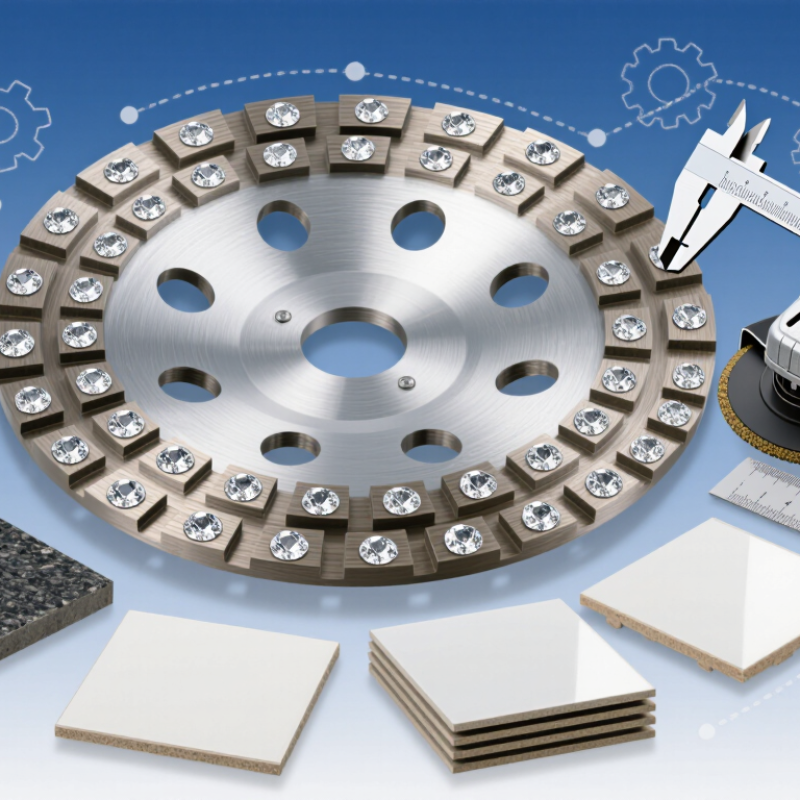
A vacuum brazed diamond disc is a steel cutting disc with diamond grit bonded by an active metal alloy in a vacuum furnace. The vacuum limits oxidation and helps the alloy wet each diamond particle. Unlike electroplated discs, it usually has a single abrasive layer. Each crystal stands slightly above the bond, creating open spaces for chips and heat.
Its cutting action is easy to picture. Exposed diamond points scratch concrete, stone, glass, or composite materials, while the rotating disc carries debris away. The bond must hold the grit firmly but release worn particles at the right moment.
Too strong, and the surface becomes dull. Too weak, and diamond loss accelerates. In workshop testing, this balance often matters more than the printed grit size.
Market Context Grand View Research estimated the global diamond tools market at about USD 8.5 billion in 2023, with continued growth through 2030. A 2024 MarketsandMarkets report also identified construction and stone processing as major demand areas. These figures support broader adoption, but they do not guarantee performance for every material. A disc may cut dry concrete quickly yet overheat on dense porcelain.
Not always predictable. Check the disc’s rated material, diameter, operating speed, and cooling guidance. For abrasive masonry, deeper diamond exposure can improve speed. For brittle tile, a finer edge and controlled feed may reduce chipping. The choice still requires judgment, and real material testing remains valuable.
When choosing a vacuum brazed diamond disc in 2026, match diamond exposure to the material, not only the disc diameter. These discs suit hard, abrasive surfaces such as granite, quartzite, cured concrete, glass, ceramics, and fiber-reinforced composites. Exposed diamond particles cut aggressively because they are fixed in a strong metal bond. In workshop trials, a coarse disc removed concrete edges quickly, while a finer disc left a cleaner ceramic profile. That difference matters around corners and narrow openings.
For stone fabrication, the disc can shape sink cutouts, tile edges, and dry-grinding details. On concrete, it suits spot repairs, joint cleaning, and surface preparation before coatings. It is less forgiving on soft, gummy materials, including some plastics and unreinforced aluminum. Heat may load the cutting surface and reduce control. I have seen operators press harder when cutting slows. That usually worsens wear and dust. Use the disc within its rated speed, and confirm the arbor fits the machine.
Tips: Check material hardness, thickness, and moisture before selecting grit. Use light, steady passes. Let the diamonds cut. For dusty masonry, extraction and suitable eye, respiratory, and hearing protection are practical safeguards. Inspect the segments after several cuts, especially if the disc strikes a metal inclusion. A vacuum brazed disc is not automatically the best choice; application testing can reveal weaknesses that specifications hide.
How to Choose a Vacuum Brazed Diamond Disc in 2026?
Choosing the correct diamond grit starts with the material, not the disc color. Coarse grit, around 30–60, cuts aggressively through concrete, masonry, and rough stone. It removes material quickly but may leave a harsher edge. Fine grit, around 100–200, usually produces a cleaner finish on dense stone and tile. It cuts more slowly. I have learned that “finer” does not always mean better. A fine disc can glaze when pressure is too high or the material is unusually hard.
Match the disc size to the tool’s rated diameter, arbor, guard, and maximum RPM. A larger disc can provide deeper cutting, but it also needs enough motor power for stable rotation. For hand grinders, a smaller disc often gives better control around corners and narrow surfaces. Keep the cut steady. For granite or engineered stone, a continuous or turbo profile can reduce edge chipping. A segmented profile clears dust and debris faster during rough masonry work. The profile changes the cutting feel noticeably.
Make a short test cut before starting the main piece. Check cutting speed, vibration, edge quality, and diamond wear after several passes. Vacuum brazing exposes diamond particles directly, so excessive side pressure can damage the working layer. I once selected a disc for speed and ignored the finish; the cut was efficient but visually poor. That mistake still influences my selection process. Always compare the disc rating with the tool and material requirements. Safety glasses, hearing protection, and proper dust control remain essential.
Diamond grit selection depends on the material and the required cutting finish. Coarser grits generally remove material faster, while finer grits produce smoother edges and are better suited to brittle or precision applications.
Use 75–100 mm discs for detailed work and small grinders, 115–125 mm discs for general-purpose cutting, and 180–230 mm discs for deeper cuts where the tool supports the larger diameter.
Continuous rims provide cleaner edges on glass, tile, and ceramics. Segmented or serrated profiles improve chip clearance and cutting speed in concrete, stone, and other abrasive materials.
Choose the coarsest grit that still meets the required edge quality, then confirm the disc diameter, bore size, maximum RPM, and tool compatibility before use.
How to Evaluate Disc Quality, Compatibility, and Service Life
A reliable vacuum brazed diamond disc should show consistent diamond placement across the cutting edge. Uneven gaps can create vibration, rough cuts, and premature wear. Examine the brazed layer under bright light. The diamonds should appear firmly anchored, not loosely scattered. A clean edge also matters. Excessive metal buildup may reduce cutting efficiency.
Check the disc diameter, arbor size, maximum RPM, and cutting direction before installation. The disc must match your grinder or saw without forced adapters. Confirm that its diamond concentration suits the material. Concrete, ceramic, glass, and composite materials can require different grit profiles.
Dry cutting creates more heat, so ventilation and short cutting intervals become important. Wet cutting may extend service life, but only when the equipment permits it.
Service life depends on pressure, alignment, material hardness, and operator technique. Record how many cuts the disc makes before performance drops. That simple note is useful. I once blamed a disc for fast wear, but excessive side pressure caused the problem. This is easy to miss. Stop using the disc when cracks, deep grooves, missing segments, or unusual wobble appear. A disc that cuts slowly is not always finished; resin, dust, or heat may be masking its condition. Clean it carefully, inspect it again, and judge performance under controlled pressure.
Choose the disc by workpiece, not by appearance. For granite, concrete, cured mortar, or glass, select a diamond grade and grit suited to hardness and aggregate. Coarse grit usually cuts faster, while finer grit can leave a cleaner edge. Match the disc diameter and arbor to the machine. The disc’s rated RPM must exceed the grinder’s maximum speed. Check the label every time. In my workshop, I also inspect the braze, segment profile, and flange contact area. A perfect-looking disc can still be wrong.
Safe use starts with a guarded machine, eye protection, hearing protection, and suitable respiratory protection. OSHA’s respirable crystalline silica standard sets an exposure limit of 50 micrograms per cubic meter over eight hours, with an action level of 25 micrograms (29 CFR 1926.1153). Use wet cutting or local exhaust when the disc and equipment allow it. CDC/NIOSH guidance also emphasizes controlling silica dust at its source. Never force the disc, twist it in the cut, or apply side pressure unless it is designed for that work. Not every cut is clean. Stop if vibration, overheating, unusual noise, or missing diamond appears. I have learned to pause sooner; saving a few seconds is not worth damaging the disc or losing control. Let the tool stop completely before inspection or adjustment.
| Selection Factor | Recommended Choice | Typical Specifications or Data | Best Application and Reason | Safety Check |
|---|---|---|---|---|
| Workpiece Material | Match the disc to the hardest material being cut, shaped, or ground. | Concrete, masonry, stone, glass, ceramics, fiber-reinforced composites, and other hard, abrasive materials. | Vacuum-brazed diamond discs have exposed diamond particles and are generally suited to hard materials requiring fast cutting or surface shaping. | Confirm that the disc is specifically rated for the material and operation. |
| Disc Diameter | Choose a diameter that matches the tool guard, spindle, flange, and rated capacity. | Common handheld sizes include approximately 100–125 mm; larger sizes may be used on compatible equipment. | Smaller discs are easier to control in detailed work. Larger discs can provide greater cutting depth but require a compatible machine and guard. | Never install a disc larger than the tool manufacturer permits. |
| Diamond Grit Size | Select coarse grit for removal and fine grit for smoother finishing. | Coarse: approximately 30–60 grit; medium: approximately 70–100 grit; fine: approximately 120 grit or finer. | Coarse grit removes material faster and may leave a rougher surface. Fine grit improves surface finish but usually cuts more slowly. | Use light, controlled pressure; excessive force can damage the workpiece or disc. |
| Disc Profile | Choose the profile according to the required operation. | Continuous rim for controlled cutting; segmented or open profiles for improved debris clearance; cup-style profiles for surface grinding. | Continuous rims can help reduce chipping. Open or segmented designs can improve cooling and dust removal during heavier work. | Use only the profile approved for the intended cutting or grinding operation. |
| Wet or Dry Operation | Use dry cutting or grinding unless the disc and machine are explicitly approved for wet use. | Dry operation requires effective dust extraction and ventilation. Wet operation requires water-compatible equipment and electrical protection. | Water can reduce dust and heat, while dry operation is more convenient for portable work but may create respirable dust. | Do not introduce water near electrical equipment unless the complete setup is designed and protected for wet operation. |
| Maximum Operating Speed | Use a disc whose marked maximum speed is equal to or higher than the tool’s no-load speed. | Speed is stated in revolutions per minute (RPM) or surface speed. There is no universal safe RPM for every disc size or design. | Disc diameter, construction, and intended operation affect the allowable speed. The disc marking and tool instructions take priority. | Never exceed the lower speed rating of the disc or machine. |
| Arbor and Mounting Compatibility | Verify the arbor diameter, mounting system, flange dimensions, and rotation direction. | Common arbor sizes vary by tool and region; the disc opening must fit securely without forced modification or excessive clearance. | Correct mounting prevents vibration, slipping, and uneven loading during operation. | Do not enlarge the arbor hole, use improvised spacers, or mount a damaged disc. |
| Diamond Exposure and Bond | Choose a disc with sufficient exposed diamond for the material and desired cutting rate. | Vacuum brazing bonds diamond particles directly to the working surface, normally providing high initial diamond exposure. | High exposure can support aggressive cutting and improved debris clearance, but it may be less suitable for delicate, chip-sensitive surfaces. | Stop using the disc if diamonds are missing excessively, the rim is deformed, or the bond shows damage. |
| Cutting Depth or Grinding Load | Use shallow passes rather than forcing the disc through the material in one heavy pass. | Actual depth depends on disc diameter, tool power, material hardness, and the manufacturer’s rating. | Controlled passes reduce heat, vibration, binding, and unnecessary wear. | Keep both hands on the tool when required and maintain a stable stance. |
| Dust and Debris Control | Use local extraction, suitable ventilation, or approved wet suppression. | Cutting masonry, concrete, stone, and ceramics can generate respirable crystalline silica dust. | Effective dust control reduces airborne contaminants and improves visibility around the cut. | Wear a properly selected respirator when required by the risk assessment; do not rely on a simple nuisance-dust mask. |
| Pre-Use Inspection | Inspect the disc and machine before every use. | Check for cracks, warping, loose segments, damaged mounting holes, missing diamonds, contamination, and excessive wear. | Early inspection helps identify defects that could cause vibration, breakage, or loss of control. | Run the tool briefly at no load in a protected position after mounting and before contacting the workpiece. |
| Personal Protective Equipment | Use eye, hearing, respiratory, and protective equipment appropriate to the task. | Safety glasses plus a face shield, hearing protection, protective footwear, and suitable work clothing are commonly required. | Diamond cutting and grinding can eject fragments, create high noise levels, and produce hazardous dust. | Keep loose clothing, jewelry, and hair away from rotating parts; use gloves only when they do not increase entanglement risk. |
| Storage and Service Life | Store the disc dry, clean, flat, and protected from impact. | Avoid moisture, corrosive chemicals, extreme heat, and contact with other tools that could damage the rim or mounting area. | Proper storage helps preserve the brazed bond and prevents deformation or corrosion of supporting components. | Retire the disc when its wear limit, damage condition, or service guidance requires replacement. |
It suits granite, quartzite, cured concrete, glass, ceramics, and fiber-reinforced composites. Exposed diamonds cut hard, abrasive surfaces efficiently. Soft plastics and unreinforced aluminum may create heat and loading. Not every material responds well.
Coarse grit usually removes material faster. Finer grit can leave a cleaner ceramic edge. A coarse disc worked quickly on concrete corners. A finer disc produced a smoother tile profile.
Common uses include sink cutouts, tile edges, joint cleaning, and concrete surface preparation. It can also handle dry-grinding details. Narrow openings need controlled passes. Corners require extra care.
Inspect the cutting edge under bright light. Diamond particles should appear evenly placed and firmly anchored. Avoid excessive metal buildup. Uneven gaps may cause vibration and rough cuts.
Check the disc diameter, arbor size, cutting direction, and maximum RPM. The rated RPM must exceed the machine’s maximum speed. The arbor should fit without forced adapters. Check the label every time.
Use a guarded machine, eye protection, hearing protection, and suitable respiratory protection. Use wet cutting or local extraction when equipment permits. Keep cutting intervals short during dry work. Let the disc cut.
Use light, steady passes and maintain proper alignment. Do not force, twist, or apply side pressure. Excessive pressure creates heat, dust, and faster wear. I once blamed the disc unfairly.
Stop when you see cracks, deep grooves, missing segments, or unusual wobble. Also stop after overheating or abnormal noise. A slow disc may only need cleaning. Inspect it again under controlled pressure.
Choosing a vacuum brazed diamond disc in 2026 starts with understanding how it works. Diamond particles are firmly bonded to the disc’s surface through a brazing process, creating an exposed cutting edge that removes hard materials efficiently while allowing debris to clear from the working area. This design is suitable for materials such as concrete, stone, ceramics, glass, composites, and selected metals, depending on the disc specification and application.
To select the right vacuum brazed diamond disc, match the diamond grit to the material and choose the disc diameter, bore size, thickness, and cutting profile according to the tool and task. Coarser grit can support faster stock removal, while finer grit may provide smoother control and finishing. Quality should be evaluated through uniform diamond distribution, secure bonding, balanced construction, accurate dimensions, and expected service life. Always confirm tool compatibility, follow operating limits, inspect the disc before use, and wear appropriate eye, hand, hearing, and respiratory protection.
