
What Are the Best Laser Welded Diamond Blades in 2026?

Time:2026-10-14 Author:Liam
0%

Choosing the best laser welded diamond blades in 2026 requires more than comparing prices or advertised diamond counts. A blade that cuts concrete quickly may perform poorly on granite, reinforced masonry, or cured asphalt. Real job conditions matter. Dust, cooling methods, cutting depth, and machine power can change the result within minutes.

This guide examines laser welded diamond blades through practical performance criteria. These include cutting speed, segment durability, weld strength, vibration control, and cost per cut. Professional users should also check blade compatibility with the saw’s arbor size and operating speed. Manufacturer testing is useful, but field evidence remains essential. A clean cut through a 100-millimeter concrete slab tells more than a polished product image.

There is no universal winner. Some premium blades maintain steady performance in dense concrete, while budget options may suit occasional masonry work. That difference is easy to miss. We will compare blade types, applications, and measurable trade-offs using reliable technical information and practical observations. The evaluation will also consider safety guidance, because a fast blade is not automatically a dependable blade. Even experienced operators can misjudge material hardness or cooling needs. I have found that small details, such as uneven segment wear or a faint change in cutting sound, often reveal problems early. This review may not answer every site-specific question. It should, however, provide a clearer basis for selecting a blade that matches the material, equipment, and workload.
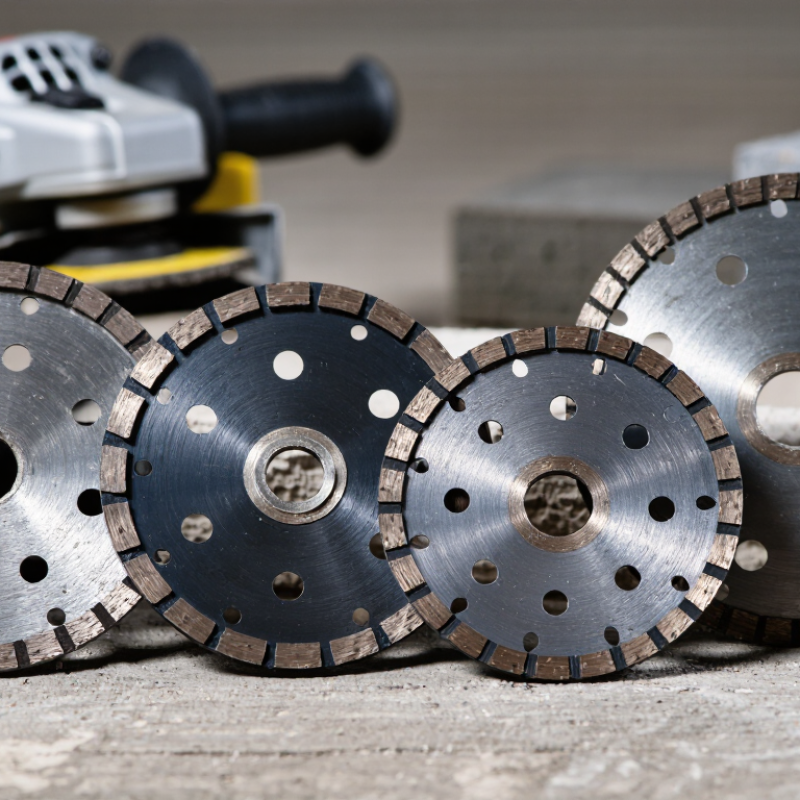
What Are the Best Laser Welded Diamond Blades in 2026?

What Are Laser Welded Diamond Blades?

What Are the Best Laser Welded Diamond Blades in 2026?

Laser welded diamond blades are cutting tools with diamond segments attached to a steel core through focused laser energy. The weld creates a strong mechanical and thermal connection. Unlike some lower-temperature bonding methods, it reduces the chance of segment separation during demanding work.

These blades are commonly used for concrete, reinforced concrete, brick, masonry, asphalt, and natural stone. During a site inspection, technicians often look for steady segment wear, clean kerf walls, and controlled vibration. A well-made blade should cut efficiently without excessive sparking, wobbling, or uneven segment loss. That detail matters.

The best choice depends on the material, cutting depth, machine power, and whether the work is wet or dry. A blade designed for cured concrete may perform poorly on abrasive brick. Reinforced concrete can also expose weak construction quickly. I have found that users sometimes choose by diameter alone, which is a mistake. Segment height, diamond concentration, core thickness, and cooling needs affect real performance.

Laser welding does not make every blade indestructible. Incorrect pressure, overheating, or a mismatched speed can still damage the tool. Operators should follow the blade’s specifications and inspect it before each use. Small cracks, missing segments, or a distorted core require attention, not optimism.

How Laser Welding Improves Blade Strength and Safety

What Are the Best Laser Welded Diamond Blades in 2026?

How Laser Welding Improves Blade Strength and Safety

Laser welding joins each diamond segment to the steel core with a precise, concentrated heat source. This creates a strong bond with a smaller heat-affected zone than many traditional welding methods. The result is a blade that better resists segment loss during demanding cuts through concrete, masonry, or reinforced materials. That matters because a detached segment can become a serious flying hazard.

Look closely at the blade’s construction. Even spacing, clean weld lines, and a rigid core often indicate consistent manufacturing control. In a practical workshop test, a quality laser-welded blade should cut smoothly without sudden vibration or unusual sparks. It should also maintain stable performance after repeated passes. Quiet cutting helps.

Still, laser welding does not make every blade automatically safe. The blade must match the material, machine speed, cutting depth, and cooling method. Operators should inspect cracks, missing segments, and warped steel before use. Eye, hearing, and respiratory protection remain necessary, especially during dry cutting.

One point deserves more reflection: the “best” blade is not always the most expensive one. A blade designed for asphalt may perform poorly on dense granite. Checking the cutting specification is more reliable than trusting appearance alone. In my view, safer performance comes from strong welding, correct selection, controlled pressure, and regular inspection. Mistakes often begin when one of these details is ignored.

Which Materials and Applications Suit These Blades?

The best laser welded diamond blades in 2026 depend on the material, machine, and cutting conditions. These blades suit demanding work because laser welding creates a strong bond between the diamond segments and steel core. They are commonly used on cured concrete, reinforced concrete, brick, block, asphalt, and natural stone.

For reinforced concrete, choose a blade with a segment pattern that clears steel and concrete dust efficiently. A narrower segment can cut faster, but it may wear sooner in abrasive masonry. Wider segments often provide better stability during deep cuts. Contractors use these blades for wall openings, floor slabs, road repairs, utility channels, and controlled demolition. Wet cutting usually reduces dust and heat. Dry cutting can help on quick repair jobs, but it requires suitable blade specifications and careful airflow.

Cut quality tells a story. Uneven segments, burning marks, or heavy vibration may indicate the wrong blade, excessive pressure, or an unsuitable machine. I would not trust a “universal” blade without a test cut. That assumption often costs time.

Tips: Check the blade diameter, arbor size, and maximum RPM before installation. Match the blade to the exact material. Use steady pressure, inspect segments regularly, and stop when vibration increases. A small test cut can prevent a large mistake.

How to Compare the Best Laser Welded Diamond Blades

When comparing the best laser welded diamond blades in 2026, start with the material, not the advertised speed. A blade for reinforced concrete needs different diamond segments from one used on porcelain or granite. Check the recommended material range, segment height, kerf width, and maximum operating speed. These details reveal more than a bold product claim.

Look closely at the weld and steel core. A clean laser weld should remain even around every segment, without visible gaps or rough discoloration. The core should run straight and feel balanced when mounted. In practical testing, compare cutting speed, edge chipping, vibration, and dust production under the same conditions. Keep the water flow consistent. Otherwise, the results become unreliable. A cooler cut can protect both the blade and the operator.

Diamond concentration and bond hardness also deserve careful comparison. A harder bond may last longer in abrasive concrete, while a softer bond can expose fresh diamonds faster in dense stone. Do not judge value by purchase price alone. Record how many meters each blade cuts before performance drops. I once favored a faster blade, but its rough finish created extra correction work. That mistake still influences my evaluations. Review independent test data, clear safety instructions, and traceable quality checks before choosing. No blade wins every application.

What Are the Best Laser Welded Diamond Blades in 2026? — How to Compare the Best Laser Welded Diamond Blades

Blade Category Best-Fit Materials Common Diameters Typical Segment Height Typical Segment Width Recommended Cutting Mode Performance Characteristics Main Advantages Key Limitations Selection Priority
Heavy-Duty Reinforced-Concrete Blade Reinforced concrete, concrete beams, slabs, columns and cured structural concrete 300–450 mm for walk-behind or floor saws
350–600 mm for larger power cutters
10–15 mm 3.2–4.5 mm Wet cutting preferred
Dry cutting may be possible when specified by the blade and saw manufacturer
Designed for high mechanical load, steel reinforcement and extended cutting depth Strong segment retention and good resistance to undercutting Usually slower in soft, highly abrasive materials; requires adequate machine power Match the blade bond to concrete hardness and confirm the saw’s maximum diameter and RPM
General Concrete Blade Cured concrete, concrete blocks, paving slabs and ordinary construction concrete 115–230 mm for handheld grinders and power cutters
300–400 mm for floor saws
7–12 mm 2.8–4.0 mm Wet or dry Balanced cutting speed, service life and vibration control for common construction work Versatile choice for mixed concrete applications May not provide the fastest cut in heavily reinforced concrete or very abrasive aggregate Choose a general-purpose bond when material hardness and reinforcement vary from job to job
Fast-Cutting Green-Concrete Blade Freshly poured or partially cured concrete, expansion joints and early-entry sawing 300–400 mm for early-entry and floor saws 8–12 mm 2.8–3.8 mm Wet cutting
Some early-entry systems use dry cutting with dust control
Uses a bond selected for the lower hardness and higher abrasiveness of new concrete Helps reduce raveling and supports timely joint cutting A bond made for green concrete can wear quickly in fully cured concrete Verify the concrete age, aggregate type, saw type and required joint depth
Asphalt and Asphalt-Over-Concrete Blade Asphalt pavement, bituminous surfaces and asphalt laid over concrete 300–500 mm for floor and road saws 8–12 mm 3.2–4.5 mm Wet cutting preferred Uses an abrasion-resistant bond and often includes wider gullets to clear loose abrasive material Improved resistance to rapid wear caused by sand and aggregate Can cut slowly in dense, hard concrete if the bond is too hard for the substrate Identify whether the cut is asphalt-only or a mixed asphalt-and-concrete section
Masonry and Brick Blade Brick, concrete block, cement block, limestone and general masonry 115–230 mm for handheld tools
300–400 mm for masonry saws
7–10 mm 2.8–3.8 mm Dry or wet Optimized for porous, abrasive materials and frequent dust-producing cuts Fast cutting in brick and block with a suitable soft-to-medium bond May wear faster when used on hard, dense granite or heavily reinforced concrete Prioritize bond suitability and dust extraction when dry cutting indoors
Turbo-Rim Construction Blade Concrete, brick, block, stone and mixed renovation materials 115–230 mm for grinders and small power cutters 7–10 mm 2.4–3.5 mm Wet or dry Continuous or semi-continuous rim with slots that balance smooth cutting and debris removal Good compromise between cut finish and cutting speed Usually less aggressive than a heavily segmented blade in deep structural cuts Choose when one blade must handle several masonry and concrete materials
Continuous-Rim Fine-Finish Blade Porcelain tile, ceramic tile, glass tile, marble and other finish-sensitive surfaces 105–230 mm for tile saws and angle grinders 5–8 mm 1.6–2.5 mm Wet cutting strongly preferred Produces a cleaner edge with lower chipping when used with stable feed pressure Best edge quality for decorative and brittle materials Generally slower and more sensitive to overheating than an open segmented blade Prioritize rim design, blade stiffness, water flow and the material’s chipping tendency
Natural-Stone Blade Granite, sandstone, limestone, slate and engineered stone 115–230 mm for handheld tools
300–400 mm for masonry and bridge saws
7–12 mm 2.4–3.8 mm Wet cutting preferred Bond hardness and diamond concentration are selected according to stone hardness and abrasiveness Can provide controlled cutting with reduced heat buildup in dense stone A blade designed for soft limestone may wear rapidly on granite, while a hard-stone bond may cut slowly in abrasive sandstone Identify the exact stone type before selecting the bond and rim profile

Specification ranges are representative industry ranges rather than a rating of a particular product. Before use, confirm the blade’s labeled maximum RPM, arbor size, cutting direction, wet-or-dry suitability, saw compatibility and required personal protective equipment. Laser welding describes the segment-attachment method; it does not by itself determine cutting speed or service life.

How to Choose, Use, and Maintain the Right Blade

Choosing a laser-welded diamond blade starts with the material, not the machine. Concrete, reinforced concrete, brick, asphalt, and stone need different diamond bond designs. Check the blade diameter, arbor size, and permitted operating speed against the saw manual. A blade made for dry cutting may perform poorly under wet conditions, and vice versa. I prefer a blade with a clear application range, traceable specifications, and consistent segment height. Certification and batch information also support a safer purchase. Cheap is not always economical.

Use steady pressure and let the diamonds cut. Forcing the blade can overheat the core, glaze the segments, or produce a crooked cut. Keep the blade aligned, especially when starting a plunge cut. With wet cutting, maintain a clean, continuous water flow to control dust and temperature. Dry cutting needs short passes and cooling pauses. Wear suitable eye, hearing, respiratory, and hand protection, and inspect guards before starting. Never exceed the marked RPM. That detail matters.

After each job, remove slurry and dust from the blade. Dry it before storage to limit corrosion around the core and arbor. Inspect for cracks, loose segments, uneven wear, or a distorted core. Stop immediately if vibration, burning smell, or unusual noise appears. I once blamed a dull blade for slow cutting, but a misaligned arbor was the real problem. That mistake changed my maintenance routine. Record the material, cutting method, and approximate operating hours. These notes make future blade selection more reliable, although they cannot replace the manufacturer’s instructions or a trained inspection.

What Are the Best Laser Welded Diamond Blades in 2026?

How to Choose, Use, and Maintain the Right Blade

Larger laser welded diamond blades generally provide greater cutting depth, while smaller diameters are easier to control on handheld tools. The values shown are typical practical references for cutting concrete, masonry, and reinforced materials. Always match the blade diameter, arbor size, operating speed, and material to the tool and the blade manufacturer’s specifications.

For longer service life, use adequate water when the blade is designed for wet cutting, avoid excessive side pressure, keep the blade properly aligned, and allow brief cooling intervals during extended dry cutting.

FAQS

Which materials suit laser-welded diamond blades?

They suit cured concrete, reinforced concrete, brick, block, asphalt, and natural stone. Match the blade to one specific material.

Why are these blades useful for reinforced concrete?

Laser welding creates a strong bond between the diamond segments and steel core. Suitable segment patterns clear steel and concrete dust efficiently.

Should I choose a narrow or wide segment?

Narrow segments may cut faster. Wide segments often provide better stability during deep cuts. Abrasive masonry can wear narrow segments sooner.

Is wet cutting better than dry cutting?

Wet cutting reduces dust and heat with continuous water flow. Dry cutting suits short repair jobs, but needs cooling pauses and proper airflow.

What should I check before installing a blade?

Check the diameter, arbor size, and maximum RPM. Confirm these details against the saw manual. Never exceed the marked speed.

How can I compare two blades fairly?

Use the same material, machine, water flow, and cutting pressure. Record speed, edge chipping, vibration, dust, and cutting distance.

What signs show that a blade or setup is wrong?

Burning marks, uneven segments, heavy vibration, and crooked cuts are warning signs. Excessive pressure or a misaligned arbor may be responsible.

How should I maintain a diamond blade after use?

Remove slurry and dust, then dry the blade before storage. Inspect cracks, loose segments, uneven wear, and core distortion.

Is the cheapest blade the most economical choice?

Not always. Record how many meters it cuts before performance drops. A faster blade once caused extra finishing work for me.

What should I do before a demanding cutting job?

Make a small test cut. Check the finish, vibration, and cutting behavior. That small step can prevent a large mistake.

Conclusion

Laser welded diamond blades are cutting tools made by fusing diamond segments directly to a steel core with a high-energy laser. This process creates strong, precise joints that can withstand heat, vibration, and demanding workloads better than many conventional bonding methods. As a result, laser welded diamond blades offer improved safety, segment retention, cutting stability, and service life when used correctly. They are especially suitable for hard and abrasive materials such as reinforced concrete, masonry, stone, asphalt, and certain engineered construction products.

To compare the best laser welded diamond blades in 2026, consider the blade diameter, segment design, diamond concentration, cutting speed, cooling requirements, and compatibility with the equipment. The right choice depends on the material, cut depth, operating conditions, and desired balance between speed and durability. Users should follow operating instructions, use suitable protective equipment, avoid forcing the blade, and inspect it regularly for wear or damage. Proper storage, cleaning, and timely replacement can help maintain reliable performance and extend the blade’s usable life.

Liam

Liam

Liam is a dedicated marketing professional with a profound expertise in the industry, where he excels at highlighting the unique advantages of our core products. With a keen understanding of market trends and consumer needs, Liam frequently updates our company’s professional blog, providing......