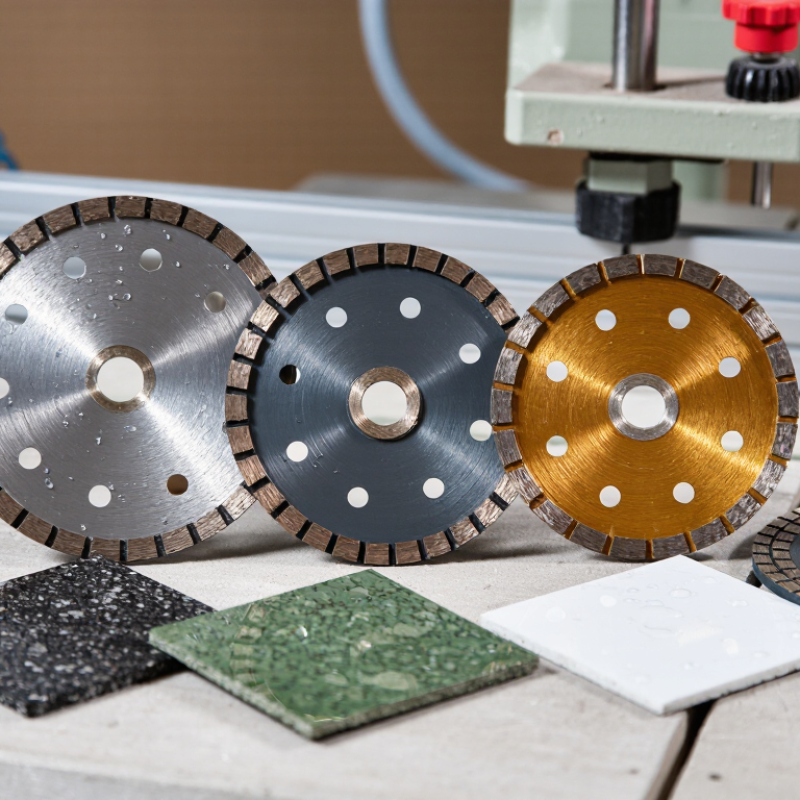
| Continuous-Rim Diamond Blade |
Fine, low-chipping cuts in granite tiles, slabs, and finished edges |
Approximately 40/50 to 80/100 diamond grit |
Wet cutting is generally preferred |
Produces a smooth finish and helps reduce edge breakout, but may cut more slowly than segmented designs |
Maintain a continuous water supply when the blade is designed for wet cutting |
Flush the blade after use and remove slurry from the guard, arbor area, and water channels |
| Segmented-Rim Diamond Blade |
Fast cutting of thick granite, masonry, and rough construction work |
Approximately 30/40 to 50/60 diamond grit |
Wet or dry, only when permitted by the blade specification |
Offers faster stock removal and better debris clearance, with a rougher cut and potentially more chipping |
Use suitable respiratory protection and dust control for dry cutting |
Inspect segments for uneven wear, cracks, missing sections, or excessive undercutting |
| Turbo-Rim Diamond Blade |
General-purpose cutting where a balance of speed and finish is required |
Approximately 40/50 to 60/80 diamond grit |
Wet cutting is recommended for granite |
Usually cuts faster than a continuous rim while providing a cleaner edge than a fully segmented rim |
Use the correct blade guard and keep the workpiece firmly supported |
Check the rim for glazing; dress or replace the blade according to the manufacturer’s instructions |
| Thin-Kerf Diamond Blade |
Reducing material waste when cutting thinner granite pieces or tiles |
Approximately 50/60 to 80/100 diamond grit |
Wet cutting is normally preferred |
Creates a narrower cut and may reduce power demand, but is more sensitive to bending, side pressure, and misalignment |
Never twist, force, or side-load the blade during a cut |
Verify flange cleanliness, arbor alignment, and blade straightness before every use |
| High-Quality Sintered Diamond Blade |
Repeated production cutting of granite slabs and other dense stone |
Selected according to granite hardness, machine type, and required finish |
Wet cutting with controlled feed pressure |
Provides consistent cutting when the diamond bond is matched to the stone and operating conditions |
Do not exceed the blade’s marked maximum operating speed |
Record cutting performance, inspect wear regularly, and replace the blade before structural damage occurs |
| Blade Diameter Selection |
Matching the blade to the cutting depth and machine capacity |
Common sizes include approximately 105–400 mm for portable and bench equipment; larger sizes require dedicated machines |
Determined by the saw and the required cutting depth |
A larger diameter can provide greater cutting depth, but it requires compatible guarding, power, and spindle speed |
Use only the diameter and arbor size approved for the machine |
Confirm that the blade is centered, securely clamped, and free from damage before installation |
| Operating Speed |
Safe operation across different blade diameters and machine types |
Use the speed printed on the blade or supplied in its technical documentation |
Machine speed must remain within the blade’s rated limit |
Excessive speed can increase heat, vibration, segment damage, and the risk of blade failure |
Never exceed the blade’s maximum revolutions per minute |
Check the machine speed, spindle condition, and blade rating before each installation |
| Water Management |
Controlling heat and airborne dust during wet granite cutting |
Not applicable |
Use clean, continuous water directed at the cutting zone |
Helps cool the blade, reduce dust, and carry abrasive slurry away from the cut |
Keep electrical connections protected from water and prevent hoses from contacting moving parts |
Clean clogged water lines, trays, pumps, and guards after each work session |
| Dry-Cutting Dust Control |
Short-duration work where wet cutting is unavailable and the blade is rated for dry use |
Depends on blade design and granite application |
Use approved dust extraction or other effective engineering controls |
Dry cutting can create respirable crystalline silica dust and may heat the blade more quickly |
Use local extraction and appropriate respiratory, eye, hearing, and hand protection |
Allow the blade to cool, clean dust from the equipment, and inspect for heat discoloration or warping |
| Blade Inspection |
Pre-use and post-use condition checks |
Not applicable |
Inspect with the machine switched off and isolated from power |
Early detection of cracks, bent cores, loose segments, excessive wear, or damaged arbor holes reduces failure risk |
Remove any blade showing cracks, missing segments, severe warping, or abnormal vibration |
Store blades upright or flat on a stable surface in a dry area; avoid impact and moisture contamination |
| Cutting Technique |
Improving cut quality and extending blade life |
Not applicable |
Use steady feed pressure and allow the blade to cut without forcing |
Proper technique limits overheating, wandering cuts, excessive chipping, and premature diamond wear |
Keep both hands clear of the cutting path and secure the granite against movement |
Stop immediately if the blade binds, vibrates excessively, produces unusual noise, or loses cutting ability |